
Chemical Analysis
Testing for Residual Acrylamide
In 2010, the Word Health Organization (WHO) and US Food and Drug Administration (FDA) concluded that acrylamide is a human health concern and that additional studies were needed. Since then, acrylamide has been found to cause cancer in both humans and animals. It can be formed in food by high temperature cooking of starches and sugars, but is also widely used in paper and pulp, food processing, mining, agricultural, textiles and plastics industries. Acrylamide is produced industrially as a precursor to many polymers, including polyacrylamide, which is a widely used as flocculation and water-soluble thickening agents. Excess or residual acrylamide monomer left over from any manufacturing process is of concern, when talking about the adverse health issues that could arise if it is consumed.
Approach
The most common approach we use for the determination of residual acrylamide content is High Performance Liquid Chromatography HPLC with a Photo-diode Array Detector (PDA). A quantitative method is used to quantify acrylamide monomer, usually from 5 – 5,000 ppb, which should give an in-sample equivalent, dependent on sample-to-solvent ratio, in the ppm to ppb range.
Sample Considerations
10 grams of material should be suitable to complete the HPLC testing on a sample extraction.
If you have questions about your testing requirements or would like to learn more
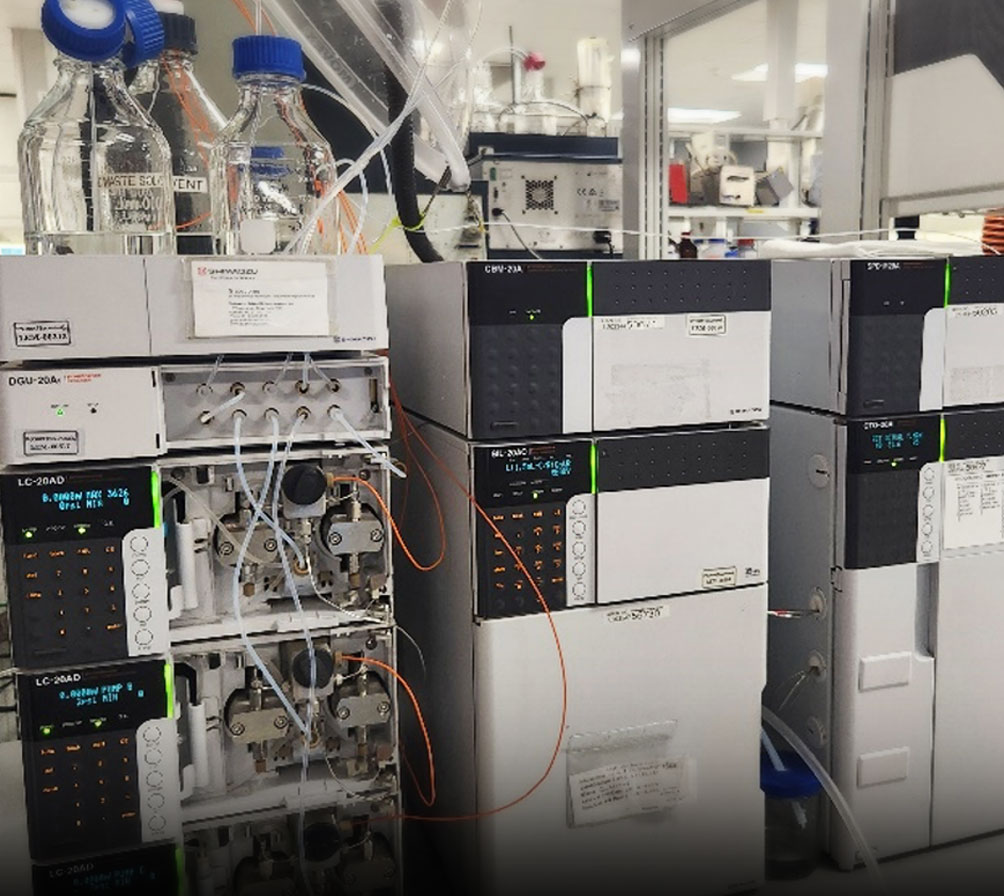
Experience
SGS PSI has experience testing residual acrylamide in a variety of substances, including drilling additives, hydrogels, adhesives, and polyacrylamide.